
Reading Time: 8–10 minutes
Quick Answer
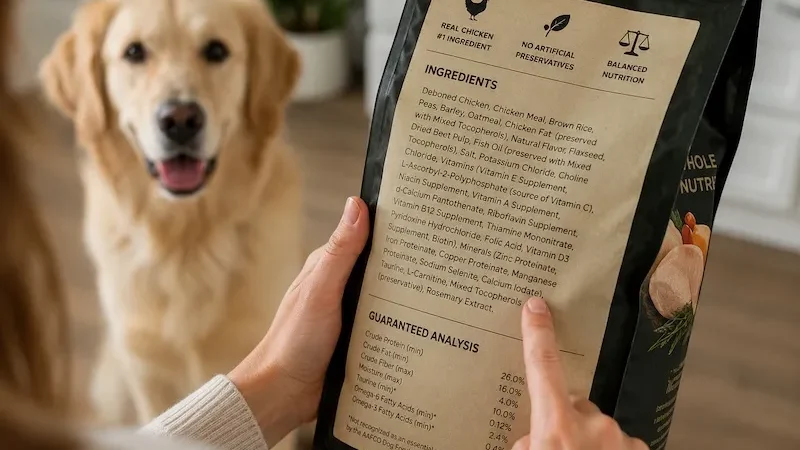
Dog food ingredients are generally listed in descending order by weight before processing. While the ingredient list provides valuable information about what’s in a food, it should always be considered alongside the guaranteed analysis, manufacturing standards, and your dog’s individual nutritional needs.
Why Learning to Read Ingredient Labels Matters
Choosing a dog food can feel overwhelming. Bags are often covered with attractive images and claims such as natural, premium, holistic, or grain free. While these terms may sound reassuring, they don’t always reflect the quality of the food itself.
Learning to read ingredient labels helps you:
- Compare foods more objectively
- Understand what your dog is actually eating
- Identify protein and fat sources
- Recognise transparent manufacturers
- Make informed decisions based on facts rather than advertising
An ingredient list alone doesn’t determine whether a food is good or bad—but it is one of the most valuable tools available to pet owners.
How Dog Food Ingredients Are Listed
In most countries, ingredients are listed in descending order by weight before processing. This means the ingredient present in the greatest quantity appears first.
However, there’s an important detail many people don’t realise: ingredients are weighed before cooking, and moisture content can significantly influence their position on the label.
Fresh Meat
Fresh meat typically contains around 70–75% water.
Because it is weighed before processing, fresh meat may appear first on the ingredient list. During cooking, much of this moisture is removed, meaning the final contribution to the finished food may be lower than it first appears.
This doesn’t make fresh meat a poor ingredient—it simply means the ingredient list should be interpreted correctly.
Related Article: Fresh Meat vs. Meat Meals Explained
Dehydrated Meat
Dehydrated meat has already had most of its moisture removed.
Because it is more concentrated, it often contributes more actual protein to the finished food than an equal weight of fresh meat.
Meat Meals
Few ingredients generate as much confusion as meat meals.
A clearly identified meat meal—such as Chicken Meal, Turkey Meal, or Salmon Meal—is a concentrated source of animal protein produced through a controlled rendering process.
When sourced responsibly, meat meals can provide highly digestible protein and are commonly used in complete and balanced dog foods.
The important distinction is transparency. Clearly named meat meals are generally preferable to vague descriptions such as animal meal or meat derivatives, where permitted by local regulations.
Understanding Plant Ingredients
Plant ingredients are often misunderstood.
Although some contribute carbohydrates, many also provide valuable nutrients including:
- Dietary fibre
- Vitamins
- Minerals
- Antioxidants
- Essential fatty acids
Ingredients such as pumpkin, sweet potato, peas, oats, flaxseed, blueberries or spinach may serve nutritional or technological purposes depending on the formulation.
Rather than judging an ingredient in isolation, consider its role within the complete recipe.
Related Article: Grains in Dog Food: Facts vs. Myths
Fats and Oils
Healthy fats are an essential part of every dog’s diet.
They provide energy and support:
- Healthy skin
- Coat quality
- Brain development
- Eye health
- Absorption of fat-soluble vitamins (A, D, E and K)
Look for clearly identified fat sources such as:
- Chicken fat
- Salmon oil
- Herring oil
- Flaxseed oil
Transparent ingredient names generally provide more useful information than vague terms like animal fat.
Vitamins, Minerals and Functional Ingredients
Most complete dog foods also contain additional ingredients that support overall nutrition.
These may include:
- Vitamins
- Minerals
- Probiotics
- Prebiotics
- Omega-3 fatty acids
- Glucosamine
- Chondroitin
- Botanical extracts
Their effectiveness depends on many factors, including the amount included, processing methods, and the individual dog’s needs.
Marketing Claims vs. Ingredient Lists
The front of a dog food bag is designed to attract attention.
Terms such as:
- Natural
- Premium
- Super Premium
- Holistic
- Grain Free
- Human Grade
are largely marketing descriptions and should never replace reading the ingredient list.
Instead, evaluate the food by considering:
- The ingredient list
- Guaranteed analysis
- Nutritional adequacy
- Manufacturer transparency
- Quality control standards
Related Article: Understanding Pet Food Marketing Claims
What to Look For
When comparing dog foods, consider whether the label includes:
✔ Clearly identified protein sources
✔ Transparent ingredient names
✔ Clearly identified fat sources
✔ Ingredients appropriate for your dog’s age and lifestyle
✔ A complete and balanced nutritional formulation
Things Worth Investigating Further
Rather than automatically labelling ingredients as “good” or “bad,” ask questions such as:
- Why has this ingredient been included?
- What nutritional purpose does it serve?
- Is it clearly identified?
- Does the manufacturer explain its use?
- Is it appropriate for my individual dog?
An evidence-based approach is usually more helpful than relying on simplified ingredient lists found online.
Ingredient List vs. Guaranteed Analysis
One of the biggest mistakes pet owners make is judging a food solely by its ingredients.
The Guaranteed Analysis provides important information about the food’s nutritional composition, including:
- Crude protein
- Crude fat
- Crude fibre
- Moisture
- Ash (where declared)
Both the ingredient list and the guaranteed analysis should be interpreted together to gain a more complete understanding of the food.
Related Article: Understanding Guaranteed Analysis
Remember
No single ingredient determines whether a food is suitable for every dog.
When evaluating any dog food, consider:
- Ingredient list
- Nutritional analysis
- Manufacturing standards
- Quality control
- Your dog’s life stage
- Activity level
- Individual health needs
- Advice from your veterinarian where appropriate
Good nutrition is about evaluating the complete formulation—not focusing on one ingredient in isolation.
Frequently Asked Questions
Is the first ingredient always the most important?
Not necessarily. Ingredients are listed by weight before processing, meaning moisture content can influence their order on the label.
Are meat meals bad?
No. Properly identified meat meals can be an excellent source of concentrated, highly digestible animal protein.
Does grain-free automatically mean healthier?
No. Grain-free foods are not inherently healthier and should only be chosen if they suit your dog’s nutritional requirements.
Can I judge a dog food by the ingredient list alone?
No. The ingredient list is only one part of evaluating a food. It should always be considered alongside the guaranteed analysis, manufacturing standards, and your dog’s individual needs.
Further Reading
- Understanding Guaranteed Analysis
- Fresh Meat vs. Meat Meals Explained
- Understanding Pet Food Marketing Claims
- How to Choose the Right Dog Food
- Dry, Wet or Fresh Food: Which Is Best?
- Understanding Dog Food Additives
- How to Calculate Carbohydrates in Dog Food
Related Guide
The Complete Guide to Reading Dog Food Labels
Want to go beyond the basics?
Our comprehensive PDF guide explains how to:
- Read ingredient lists with confidence
- Understand guaranteed analysis
- Compare different dog foods objectively
- Recognise common marketing claims
- Evaluate ingredient transparency
- Make informed nutritional decisions based on evidence—not advertising.